
These interviews come from a very simple place: I listen to a lot of music and, every now and then, I feel the need to talk to the people who make it. My name is Robert Kocsis, and this is the second interview in a series of conversations with artists and bands that spark my curiosity.
This time, I'm talking to the band GANS, formed by Eaun Woodman and Thomas Rhodes. You can catch them live this year at Electric Castle. I first found out about them through my friend Cristian, with whom I'm constantly swapping music. (Huge thanks to him for helping me draft this interview as well). Once I started listening to them, I realized just how much you can resonate with their music. So, I figured it was high time to sit down and have a proper chat with them.
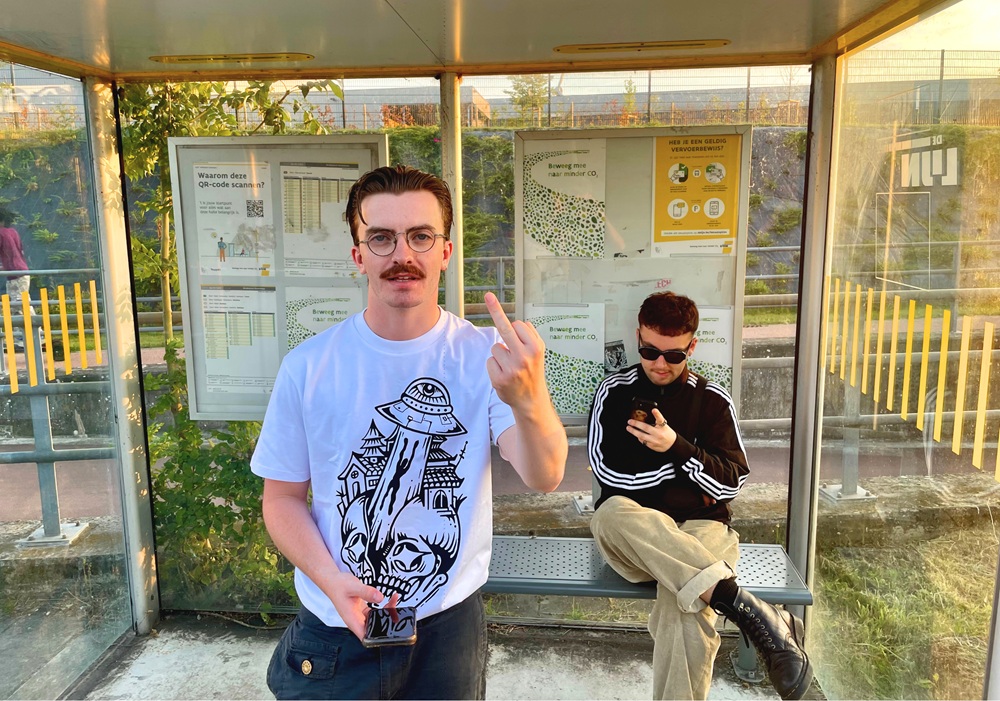
Robert Kocsis: My first question would be around the fact that a lot of music duos are making themselves seen on the music scene in the last few years, one of them being you. What made you choose this way to be on the stage?
Eaun Woodman: I think what started it was that Tom and me just formed the band. We've written songs in bands together before; we've always been for the people. The whole project started because it was just the two of us making whatever we wanted to make. Then, when it came to the live shows, we were like, "Well, it's just the two of us, so let's try and keep it that way." Also, it was easier financially as well. That isn't the first thought, but it's a big thing that impacts bands recently. If you've got a band with six members, it's really hard to get a van and financially fund yourself in order to do it. So from the start, it was just me and him and his estate car, just bumming it around England for ages.
R.K.: And what's a risk you took as a duo that actually paid off?
Thomas Rhodes: In the last year we did one hundred and forty-six shows, and this year we've got another hundred and twenty-eight planned. I got redundant from a job and then bought an estate car in which we basically just bundled everything, and the two of us drove around like lunatics for like the best last two years. Only now have we got a tour manager who's driving a van-not because we can, but actually just out of pure core safety. The risk was literally just to get in the car and gig. Especially for the last two years, we'd gig literally anywhere to anybody, you know. We'd be going to places... a lot of UK acts will only hit the main cities, they'll just do London, Manchester or whatever, whereas we, from the start, have gone out to small towns, because that's where real people are. There's more than just cities in the whole world. The risk was to go and play in the middle of nowhere and make real connections. And that's become our sort of currency, to be honest-real connections, the thing that drives us forward.
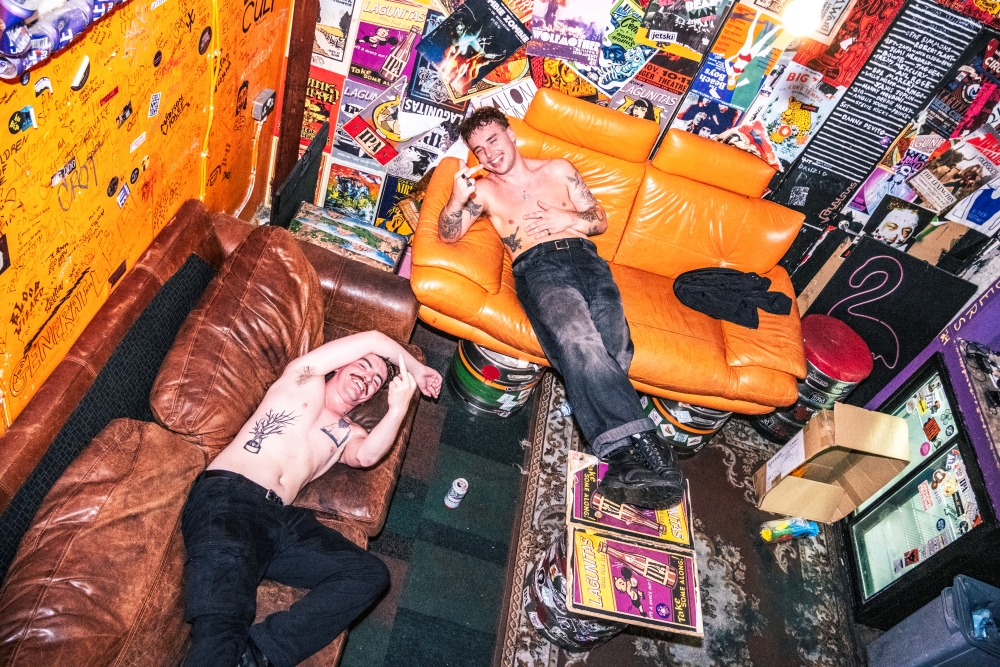
R.K.: There is a re-emergence of the punk scene all over the world. In your opinion, what made this happen?
E.W.: I think it's just a factor of people always feeling dissatisfied with the world. Especially now, America, the UK, even Europe. There just seems to be a lot of hate in the world. An anger directed at the wrong people; everyone seems divided against each other. Whereas I feel like the feeling of punk music and expression-just to be able to do whatever you want and scream and be energetic and get everyone to let loose-is a cathartic thing for people to release that energy in an environment that's good and healthy, and where everyone can feel connected together.
R.K.: Based on the fact that you sometimes just go and scream in your lyrics, I can feel that the two of you are people who lived their life and have a lot of experience. What did you learn from your life outside of music that directly shaped your music, sound and lyrics?
T.R.: We're from an area of the UK in the West Midlands called the Black Country, which is sort of a working-class place. It was the centre of the Industrial Revolution. And in the history of the region, there's also a big place for migrants who moved across a lot in the 70s. We have a huge Asian community. We have some of the best Indian food and Bangladeshi food in the country, in our opinion. So we've always grown up in a really diverse environment, without any prejudice or hate. That influenced us greatly. We love people in all their forms. And like you said, especially with the far-right movement across the world at the moment, it's really difficult. Having that experience growing up in a place like that has taught us a lot about ourselves-super working-class, super diverse, super hard-working. It runs through our core.
R.K.: Also the clips for your music have a lot of influences from the visual arts and theatre. What is the motivation behind this?
E.W: We always try to keep everything in-house and do it ourselves because then it's the most authentic visual representation of what you can get from the music that you're creating. In all the music videos and stuff, I normally end up taking a lot of clips from sort of contemporary culture at the moment-things that are relevant now, things that are happening, but also like reflected and distorted. It's like in all the videos, we always try to capture something that's going on to do with the song. So, for example, I think I like you is a song about body dysmorphia. It made sense then to base the video around food. There's a video for It's just life. And when we did that, we used loads of clips of sweatshops and prisons and, you know, other things that are in the news put together, even Sydney Sweeney in the American Eagle advert-the thing with the "good jeans". And it's like, this weird, sort of, you know, Nazi ideology that's kind of come through in Western media is really weird, and then we take this sort of stuff and almost make fun of it and just bring it to people's attention because it's an interesting thing. Also, being able to express that in a musical form at the same time.
R.K.: It's just life is the song that made me discover you. It's a song that makes the listener reflect on life in peace, but also a lot of your music is angry. How do you build this mix?
T.R.: It's like you sort of said earlier, it's the most authentic version of ourselves. We don't really have any sort of restraints in what we write; they're just expressions of ourselves and extensions of our souls and feelings. We are full of love generally. And we're really fortunate-for instance, at the moment, we've been on tour for the last six weeks. And every time we hit the stage, it just feels like this... you know, we get comments all the time from people because everybody in the audience seems so angry, but they do it with love at the same time. People are bouncing around, but there's like an overarching love in the room. We have a lot of love to give to the world and we love people. Having both been born in 2000, we're both 25, 26, and the world hasn't really helped us too much since the start. Even today in the UK, we've had the council elections and it's mostly Reform being voted in. So, you know, we want to preach and then perspire love. But also, we have an anger because things can be a bit shite.
E.W.: I also think that the anger comes from desperation. It's almost like, in a lot of it, when you hear screaming lyrically, it's normally to do with something like a frustration kind of thing. And it's almost like you want it to be better. And I think that that's where it comes from. It's not as if we've ever been angry for the sake of anger or just wanting to scream and shout or put hate into the world. All the anger is used to express desperation for it to be better. I always think that the music is angry and frustrating, but it's also hopeful at the same time because it's almost like you're pleading and you're screaming at people to try and make this thing work-to try to cement the point in their head that it can be better. And that's why it's so frustrating. That's why it makes you angry.
R.K.: I see we are talking about anger, but your first album is called Good for Your Soul. It felt like this for me, but for your soul, what is good?
E.W.: I think people, love, and being able to express yourself. I think that's the big point of why we called it that-because the act of coming to a show, we also thought it's cathartic for people to come and release and express themselves however they want to. I also think that the album title comes from the idea of, you know, if you listen to this music and you find it cathartic, then you also resonate with what we're trying to say. And listening to that... you know, anything can be good for the soul. Whatever it is that you find enjoyment in, whatever it is that you find that makes you whole, then that itself is good for the soul.
T.R.: Also good food and good coffee and cigarettes and talking to your mates.
R.K.: Always! Musically, what is your Mount Rushmore of who inspires you?
T.R.: That's difficult, man. We listen to so much music because we spend so much time in a van. I know that sometimes people like to have their own headphones in and they'll do their own thing, but generally, we all listen to everything together. So one minute we can have Fela Kuti on, the next can be like techno, and then the next we can listen to The Ramones. I struggle to give just one Mount Rushmore, but we have artists that we absolutely love. I don't think we could pin it down to one if we had to.
R.K.: What part of your sound would you never compromise, no matter how big you get?
E.W.: I think the authenticity of it. We always try and never think about what we're writing; we always just think about how we are writing for ourselves, it's that kind of thing. Because that's the job of, you know, fucking people in marketing and stuff like that, and people who do management and that sort of advertising. So for us, when we write, the whole point of it is just being ourselves. So I don't think we'll ever really compromise being true to ourselves, because that's the whole message that we've been preaching from the start. I suppose it's what we live by.
R.K.: You are coming to Electric Castle in Romania. And my question would be, what are you preparing for us?
T.R.: Probably lots of screaming and lots of jumping about. We have a flute player now as well. He recently got quoted as "the little flute boy" on our Instagram, so we're bringing the little flute boy with us to come and blow some minds, Jethro Tull style.