
These interviews come from a very simple place: I listen to a lot of music and, every now and then, I feel the need to talk to the people who make it. My name is Robert Kocsis, and this is the second interview in a series of conversations with artists and bands that spark my curiosity.
Grooveline is the first band I saw live this year. Right on January 1st. For me, the first day of the year is usually the hardest and most depressing. But as soon as I started hearing their first chords, something shifted. I was looking at the crowd, how happy they were and at the people on stage, wearing only T-shirts in the cold, just being there together. At that moment, I thought of David Byrne and his song This Must Be the Place, and I forgot everything that had been weighing on me. Months went by, and I felt it was time to reconnect with that vibe. So I sat down for a chat with Tarach Ó Snodaigh, the band's rapper and guitarist. The band also includes Bainsy (vocals and saxophone), Glen Feely (bass), Bronwyn Kirwan (drums), Captain Cian (keys and fiddle), and Matthew Connolly (guitar).
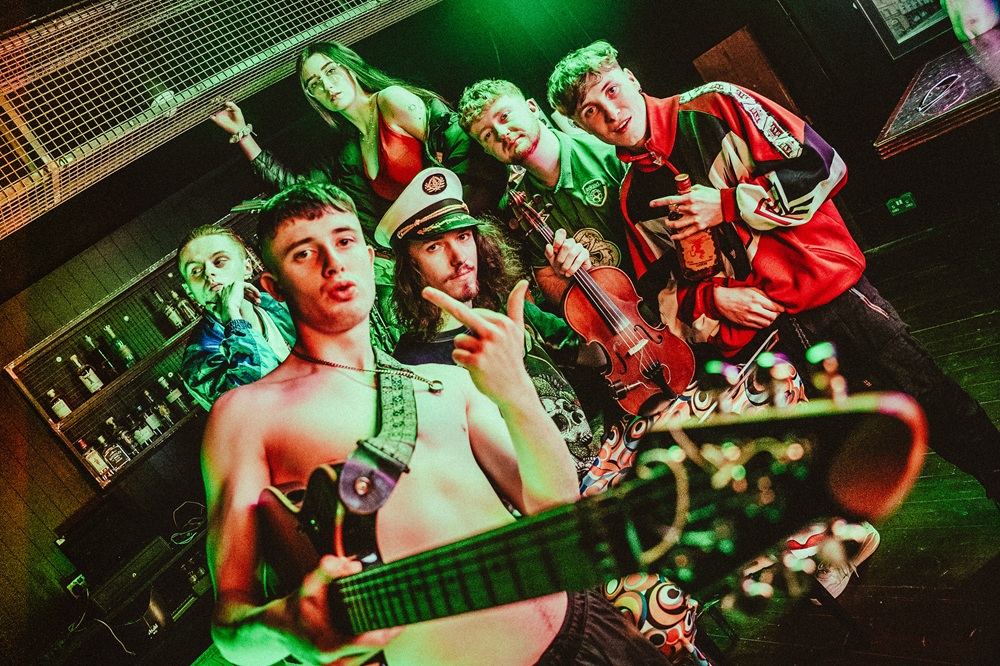
Robert Kocsis: I heard your music for the first time at the New Year's festival in Dublin. And I was curious, how was the year so far for the band musically?
Tarach Ó Snodaigh: 2026 has been amazing so far, holy shit. Like, we started off the year with one of the biggest concerts we've ever done, which obviously went down pretty well for getting interviews. That was an amazing experience to do that. Then we also released our EP, which has been in the pipeline for so many years. Like, we've had them songs written for so many years. It's just great to just have them out for people to listen to. We did a UK tour, which sold hundreds of tickets, which we were absolutely flying about. Now we are playing the Trinity Ball in April. Then we have our biggest show in the Button Factory in April, on the 24th of April, which will be deadly. Then a big summer tour. So yeah, it's going pretty well, man.
R.K.: Sounds wonderful. Sounds incredible. Seeing you on stage, I got the idea that each of you expresses themselves, trough clothing, playing, or just talking. How does the individuality shape the overall Grooveline sound?
T.Ó.S.: You're dealing with six, like, individuals in the band coming together to form a really, really tight unit. I suppose it's kind of rooted in our friendship together. We've all been friends together since we were in kindergarten. We all grew up in the same village together. We all are comfortable in our own personalities around each other. Which I think makes it, and then musically, we all have very different music tastes and also very similar music tastes, which make groove line work. So you get to see that in each musician and the influence of each musician on stage.
R.K.: You also do double duty on stage, playing multiple instruments and also singing. How do you get all the energy for dancing and hyping the crowd up?
T.Ó.S.: It is like playing tennis with a room and an audience. When you're on stage, you have to treat the audience almost like your dance partner but you're the leader of this dance, you have to make sure the dance partner feels welcome in the space that you're creating. But my energy relies a bit on the dance partner as well, I have to lead them in for a good level of hype, if you know what I mean. If I back out the energy then and I get it back and then I throw it back and then it just becomes like ping pong. That's actually where I get the energy. I get the energy if I put it out and I receive it back. So if I put out loads of energy and I receive it back, well then it makes me get even more hectic.
R.K.: I also have a question your song Go Hectic. I was very curious, what has been the most hectic or unforgettable gig you ever played?
T.Ó.S.: I think one of the most unforgettable ones was playing Electric Picnic, we were the last band to play. We finished off the entire festival for live music. There were thousands of people there and everybody was on the exact same buzz as we were and it was pretty incredible. That's probably my favourite gig today. And then I remember we played C Sessions in 2024 because we're from the North West and that was our biggest gig ever we had in the North West. That was a real come home thing for us. I remember losing my absolute shit on that stage. And then recently, actually an unforgettable gig, how hectic it was, my guitar broke. We played the Bricks and Jam in London, 300 people came out, my guitar broke. I basically just started throwing it around the stage and shit, which was funny.
R.K.: What does your songwriting process usually look like? Do you start with a groove, a lyric or a jam together?
T.Ó.S.: Our songwriting process mainly develops from us being in a room together and one of us having an idea of a chord progression or a little riff and then we'll work on it. And then we'll just jam ideas together in the room together. Before we even touch the lyrics, we have all the music done and we have basically all the parts of the music created. Then once the music is created, we'll then start looking at melody, harmony and lyrics, which is really fun because we're all music heads. All of us love instrumental music, have no problem with EDM. Even if you listen to our show, the main thing is revolving around the music and the melodies, the dynamics the builds and the beat. That's how our songwriting process goes one person or a few people have an idea, we'll expand on it and then cook it together. We'll put it in the oven for a few hours, loads of ideas, and then have a song and then write on top of this.
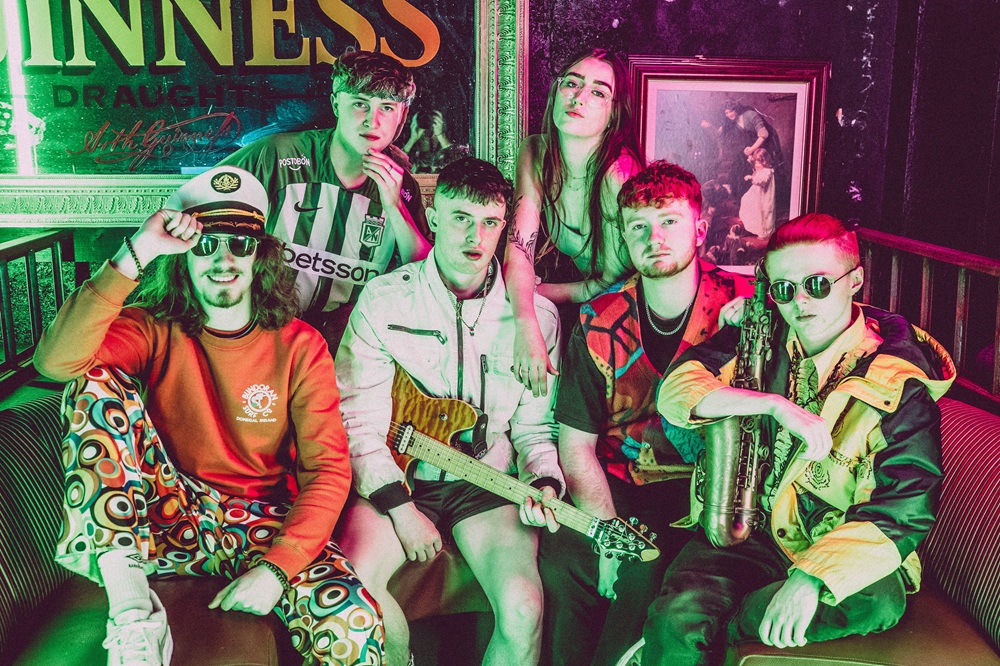
R.K.: Your music feels like a great balance between having fun and carrying a political on the stage. How do you find the balance between these two?
T.Ó.S.: I suppose it's who we are as people anyway. We're quite political. Especially as Irish people, you're intrinsically a bit political anyway. Especially from where we come from and we went to an all Irish speaking school, which in itself is a political statement against the establishment of the English language sphere that tries to put their native languages on purpose or not on purpose, but it still exists as a pressure. We grew up in an Irish language speaking school. And I suppose growing up for me, I grew up Republican, and when I say Republican, I mean Irish Republican, which isn't to do anything with the American one, I come from an Irish Republican family. Everybody else in the band, how I describe it as a buzz junkie, which is we just want to have fun. It's just more of just a reflection of who we are as people, rather than us trying to find a balance. I suppose bands like kneecap have paved the way for us for that sort of stuff, for the balancing of politicalness and satire and having fun. I think Kneecap have given us inspiration in terms of how to balance stuff. But it really just comes from who we are as people. And it's what we naturally portray anyway as people.
R.K.: On the matter that you mentioned Kneecap. Do you feel that they gave you the courage and paved the way to sing in Irish?
T.Ó.S.: We were singing in Irish beforehand. But I suppose they definitely did something. They gave us even more inspiration to sing in Irish. And not so much courage, but gave us reassurance, gave us proper reassurance that singing in your native language is cooler than anything.
R.K.: As a Romanian who follows the Irish music scene from afar, it feels that there is a strong sense of solidarity between bands, even across different genres. Do you feel that too? What makes that community work?
T.Ó.S.: I suppose the Irish music scene has been looking and looking at what we can export to America and Britain. And I think Ireland at the moment is having a cultural revolution, but not in any way that's harmful. It's a cultural revolution. For the first time since our independence, we're really looking at our own identity and reclaiming our own identity. Because we were so poor for so long, we were trying to get everything out, to work out. We thought America and England were the best things ever. Not the best, but that's where the money was. That's where success is. And now we're realising we're having this internal identity battle now where we're reclaiming our own Irish spirit and our language and our culture and our music. And looking inward and realising that we're actually amazing. And we don't have to pander to any sort of other big global power at all.
R.K.: These days in my country, in Romania, expressing national pride can sometimes be seen in a negative or uncomfortable way. In Ireland, though, it seems more natural and positive. What do you think creates this kind of healthy relationship with national pride?
T.Ó.S.: What I think creates a healthy relationship with national pride and nationalism, in my view, is cultures that aren't necessarily and inherently establishments or monarchies or any sort of political body. Irish culture is deeply rooted in thousands of years, and it doesn't really matter how old it is, of music, sport and culture. I think that's why we're so proud of ourselves. And also we're proud of our resilience from thousands of hundreds of years of oppression. So in terms of our culture and our national pride, our culture is rooted in not inherently political establishment, which I think lacks venom when it's connected to culture rather than establishment. That's one of the reasons. I think also one of the reasons is that we're an oppressed nation who understands what it's like to get bullied. We don't tend to bully other people. We're actually quite humble and humility is very important in our culture, but not like solemn humility. We don't take anything really seriously in our culture. Even in terms of rap, if you see the rap in Ireland, rappers who try to go down the American route of taking themselves seriously and bigging themselves up and talking about themselves all the time and talking about money and bitches, they don't go far in Ireland because Irish people don't really like people bragging. It's not in our nature to be a cunt.
R.K.: And in the end, do you have any message for music enthusiasts in Romania?
T.Ó.S.: My message would be to keep an eye out on the best band in Ireland, which is Grooveline.